What Moss Can Teach Us About Slowing Down
IF YOU FEEL OVERWHELMED...IF YOU WANT A FRESH PERSPECTIVE...IF YOU NEED PERMISSION TO REST...
Queen of the Forest
6/29/20265 min read
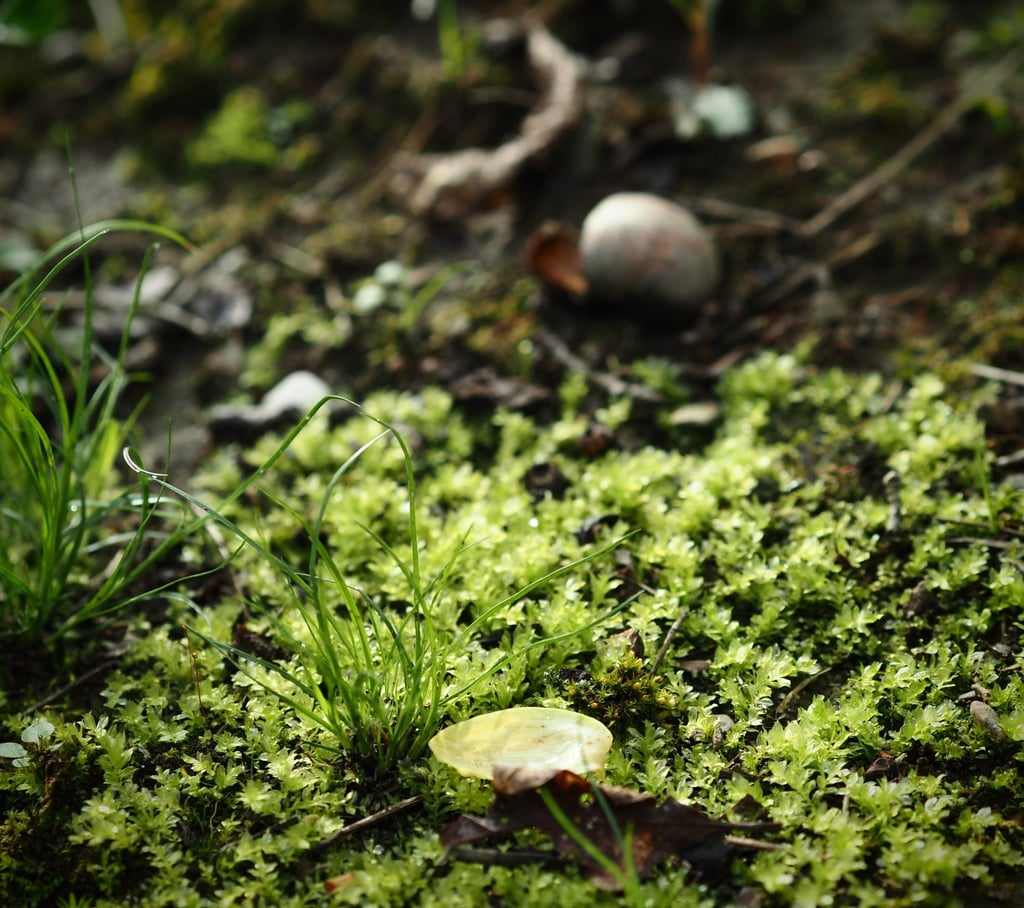
Moss is one of the quietest forms of life on earth.
It does not bloom loudly. It does not reach upward in dramatic gestures. It does not compete for attention the way flowering plants do in spring or towering trees do in forests. Instead, it spreads close to the ground, hugging stone, wood, and soil with a kind of patient intimacy.
You could walk past it a thousand times and never feel the need to stop. And yet, if you do stop, something changes in the way you see it.
Moss is not in a hurry.
It grows in a rhythm that does not match human urgency. It does not respond to schedules or deadlines. It does not accelerate for recognition or slow down for approval. It simply continues, expanding millimeter by millimeter, building entire green worlds in the smallest of spaces.
There is something almost unsettling about this at first.
We are so accustomed to speed that slowness can feel like absence. If something is not visibly progressing, we assume it is not happening at all. We mistake quiet growth for no growth. We mistake stillness for stagnation.
Moss gently challenges that assumption.
It reminds us that some forms of life cannot be measured in short intervals. They unfold on a scale that refuses urgency. A patch of moss that looks unchanged from one season to the next may, in fact, be deeply alive with continuous, almost imperceptible transformation.
It grows where many other things cannot.
On shaded stone walls. On the bark of aging trees. On rooftops, sidewalks, and forgotten corners of the world that receive little attention and less care. It does not require ideal conditions. It does not wait for everything to be perfect before it begins.
It simply begins where it is.
There is a quiet kind of wisdom in that.
So much of human life is shaped by the feeling that we should be further along by now. We compare our inner timelines to the visible achievements of others. We measure ourselves against milestones that were often never fully chosen, only absorbed from the world around us.
There is always another place we think we should have reached.
Another version of ourselves we believe we are late in becoming.
Moss does not participate in this kind of thinking.
It does not rush toward a destination.
It does not treat the present moment as something to escape.
It grows where it lands, adapting to what is available rather than resisting it. In doing so, it transforms what seems unremarkable into something quietly extraordinary.
A stone becomes a soft green landscape.
A shaded log becomes a living surface.
A forgotten wall becomes part of a slow, ongoing collaboration with time.
If you look closely, moss also teaches something about attention itself.
To notice moss, you have to slow down.
It is not visible in the same way a mountain is visible or a river is visible. It does not announce itself from a distance. It reveals itself only when you are near enough, still enough, and patient enough to see detail instead of outline.
This act of noticing changes something in the observer.
The world becomes less about destinations and more about textures.
Less about arrival and more about presence.
Less about what is ahead and more about what is already here.
There is a particular kind of relief in this shift.
When life feels overwhelming, the mind tends to narrow. It focuses on what is urgent, what is missing, what is unresolved. The present moment becomes crowded with pressure.
Moss offers an opposite experience.
It does not demand anything from you.
It does not ask you to fix your life before you are allowed to notice it.
It simply exists, quietly demonstrating that life does not always need to be accelerated to be meaningful.
There is also something deeply resilient about moss that is easy to overlook.
It survives in places that would seem inhospitable to most forms of life. It endures dryness, cold, shade, and neglect. It waits through long periods of stillness, and then continues when conditions allow.
Not in a dramatic burst. But in a steady return. Again and again.
This kind of resilience is not loud. It does not announce itself with triumph.
It is the resilience of continuation.
Of not giving up simply because growth is not immediately visible.
Of trusting that life can proceed even when it feels uneventful.
In a world that often equates value with visibility, moss offers a different understanding.
It suggests that what is slow is not necessarily what is failing.
That what is quiet is not necessarily what is empty.
That what is small is not necessarily what is insignificant.
There are places in your own life that may feel like moss-covered corners.
Areas where nothing dramatic seems to be happening.
Seasons where you are not sure if anything is changing at all.
Times when progress feels invisible, or even absent.
It is easy in those moments to assume something is wrong.
To believe that life should feel more dynamic, more certain, more defined.
But moss invites a gentler interpretation.
It suggests that growth does not always look like movement.
Sometimes it looks like staying.
Sometimes it looks like enduring.
Sometimes it looks like quietly continuing in conditions that do not yet feel ideal.
There is another lesson here that is easy to miss unless you spend time really looking.
Moss does not separate itself from its surroundings.
It does not dominate the surfaces it grows on. It does not erase what was there before it arrived. Instead, it softens edges. It blends. It participates in the landscape rather than trying to override it.
In this way, moss is less about control and more about relationship.
It shows us what it might mean to belong to a place without needing to change it into something else first.
To be part of a world rather than separate from it.
To take up space gently.
To exist without demanding transformation as proof of worth.
If there is a way of living that moss points toward, it is not a faster life, but a quieter one.
A life that allows things to unfold without constant interruption.
A life that trusts small changes.
A life that does not require every moment to be productive in order to be meaningful.
You do not have to become like moss in any literal sense. But there is something it can return to you.
A sense that not everything needs to be rushed. That not everything needs to be seen in order to matter. That some of the most important forms of growth happen slowly enough that you only recognize them in hindsight.
When you notice that you are no longer the same person who began.
Not because of one dramatic moment. But because of many small, almost invisible shifts over time.
Moss lives in that kind of time.
And perhaps, in some quiet way, so do we.
If you find yourself overwhelmed by the pace of things, there is always the possibility of looking closer.
At the ground beneath your feet.
At the walls you pass every day.
At the shaded places where life continues without announcement.
There you might find a reminder that slowness is not a failure of life.
It is one of its most patient forms.
Bring Some Home:
Related Book:
The photo above was taken at Cuyahoga Valley National Park, Peninsula, OH where I went to explore some waterfalls for my birthday. If this is of interest to you, you can see more photos of this trip in this video: