Why We Feel Like We Don't Belong
IF YOU WONDER WHERE YOU BELONG...
Queen of the Forest
6/28/20264 min read
Few feelings are as difficult to explain as not belonging.
It isn't always loneliness. You can feel it in a crowded room, surrounded by people who know your name.
It isn't always isolation. You might have family, friends, and people who genuinely care about you.
And yet, somewhere beneath the surface, there remains a quiet question: "Why does it feel like everyone else knows how to be here except me?"
Many people carry this feeling for years without ever speaking it aloud. They assume it must be something unique to them—a flaw in their personality, a lack of confidence, or evidence that they simply haven't found the right people. But perhaps the feeling deserves a little more curiosity than self-judgment...
The truth is that belonging is more complicated than simply being around others.
To belong is not merely to be included. It is to feel seen without pretending.
To feel safe enough that you don't have to edit yourself before you speak.
To know that your presence matters even when you have nothing impressive to offer.
Many of us spend much of our lives searching for this without realizing that's what we're looking for. Instead, we become experts at fitting in.
We learn which parts of ourselves receive approval and which parts are better left hidden.
We laugh when everyone else laughs.
We say we're doing fine because it is easier than explaining otherwise.
We shape ourselves to meet expectations we never consciously agreed to.
Over time, this can create a strange kind of loneliness. People may know the version of us we've carefully presented, while the quieter parts of ourselves remain unseen. It is difficult to feel like you belong when the person everyone welcomes is only part of who you are.
Modern life adds another layer to this experience. We now compare our ordinary moments with thousands of carefully curated lives every day. We see friendships, celebrations, achievements, and milestones without witnessing the doubts, awkward conversations, disappointments, or quiet evenings that exist between them.
The result is subtle but powerful. It begins to seem as though everyone else has found the place where they belong. Everyone except us.
But appearances have always been poor evidence of reality.
Many of the people who seem most confident carry the same quiet questions.
Many who appear deeply connected have known seasons of profound loneliness.
Many who seem completely at home in the world have spent years wondering where they fit.
Belonging is often much rarer than it appears.
There is another reason we struggle with this feeling.
We often imagine belonging as a destination. One day we'll find the perfect group.
The perfect relationship.
The perfect city.
The perfect career.
Then the feeling will disappear.
Sometimes changing our circumstances does help. There are places where we are more understood. There are people who make us feel wonderfully at ease. Finding them matters. But even then, the longing rarely disappears completely.
Perhaps because some part of belonging is not about finding the perfect place.
It is about slowly allowing ourselves to arrive where we already are.
To stop measuring our worth against impossible standards.
To stop believing we must become someone else before we deserve connection.
To trust that our ordinary selves are enough to be known.
This is easier to write than to live.
Being fully seen requires vulnerability, and vulnerability has often been met with disappointment.
Some of us learned early in life that being ourselves came with consequences.
Perhaps we were misunderstood.
Perhaps we were told we were too sensitive.
Too quiet.
Too emotional.
Too ambitious.
Too different.
Or not enough.
When experiences like these accumulate, it becomes natural to protect ourselves.
We hide what feels fragile.
We become careful.
We learn to belong by disappearing a little.
The tragedy is that the very strategies that once kept us safe can later make genuine belonging difficult. People cannot know the parts of us we've worked so hard to conceal. Still, there is hope.
Not because one day everyone will understand you.
They won't.
Not because you will finally become someone who fits everywhere.
You won't.
But because belonging has never required universal acceptance. It has always begun with smaller things.
One honest conversation.
One friendship where silence feels comfortable.
One place where you can exhale.
One afternoon where you stop apologizing for being yourself.
Belonging grows quietly. It is less like arriving at a destination and more like tending a garden.
Slowly.
Patiently.
Almost without noticing.
And perhaps there is another kind of belonging that we overlook entirely. The belonging we already have with the world itself. Before anyone knew your name, you belonged to the morning sky.
To forests.
To rivers.
To birdsong.
To changing seasons.
The earth has never asked you to prove yourself before welcoming you. The trees do not care whether you are successful. The ocean does not ask whether you have your life figured out. Sunlight falls equally on those who feel certain and those who feel lost.
Nature has a remarkable way of reminding us that existence itself is a kind of belonging. That perhaps being alive is enough reason to have a place here. If you have spent much of your life feeling like you don't quite fit, know this:
You are not strange for feeling that way.
You are not alone in carrying that question.
And you are certainly not the only person quietly wondering where you belong.
Perhaps belonging is not something waiting somewhere far away.
Perhaps it begins the moment we stop asking, "How do I become someone worthy of belonging?"
And begin asking a gentler question instead: "What would it be like to believe I already have a place here?"
That answer may not arrive all at once. But like so many worthwhile things, it often begins quietly.
With one person.
One conversation.
One walk beneath a sky that has been making room for you all along.
Related Book:
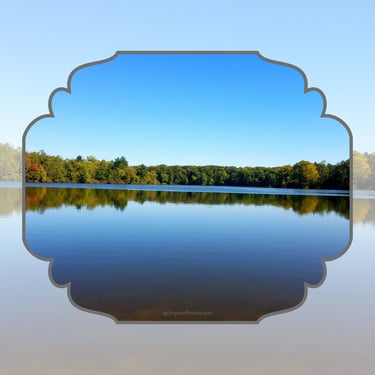
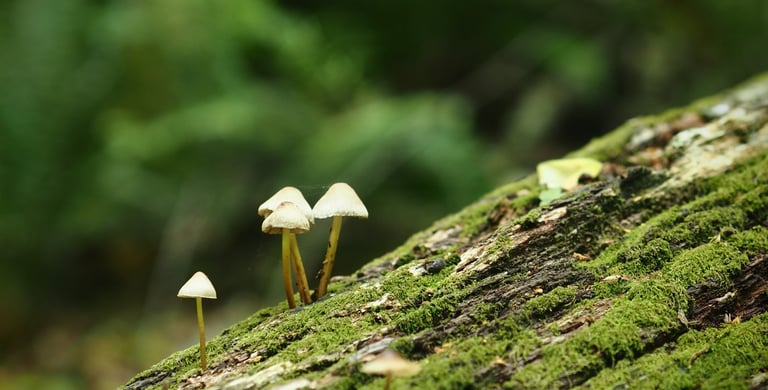
The photo above was taken at Mohican State Park/Forest in Loudonville, OH. If this place is of interest to you, you can see more photos of my experiences on this trip in this video: